.svg)
.svg)
Designing Electronics for Harsh Conditions
We expect a lot from our products, especially our electronic products. Think about it: cellphones, wearables, medical devices — for some reason we think they should still work after being immersed in liquid, left outdoors in freezing temperatures or dropped on concrete from a standing position.
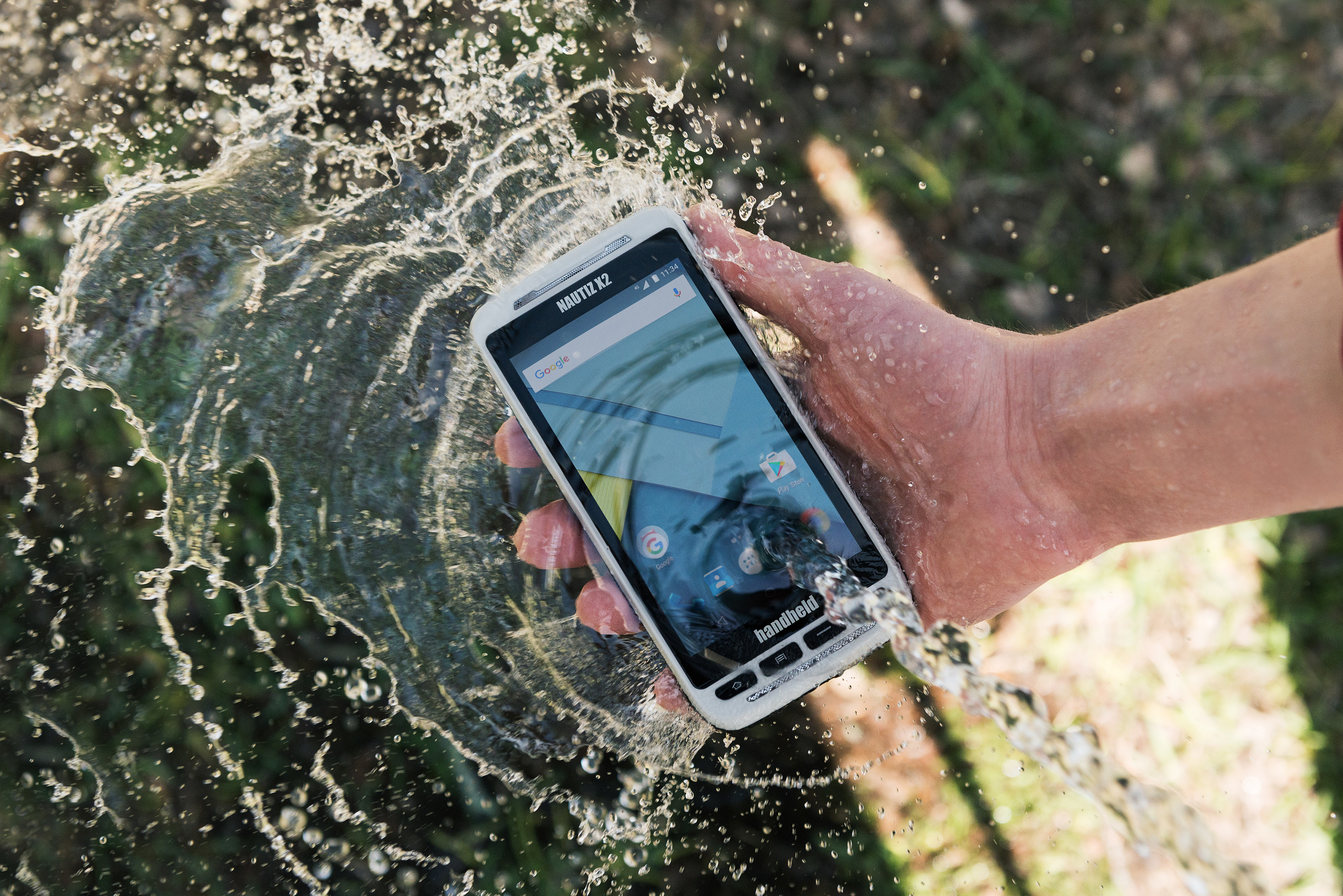
Photo courtesy of Handheld
Sometimes that's the case. We drop a smart phone in the bathtub then stick it in a bag of rice and hope for the best. Many times, though, not even Uncle Ben's can save your poor, ill-treated phone. But that wasn't because the designer didn't anticipate your fumble.
Any product designer worth their salt is going to design products to protect the electronics to withstand any abuse you can think of — and much more. Take that smart phone or laptop for example. The product has to work whether the user is at a desk in Atlanta, a warehouse in California or a factory floor in Vietnam.
The Swedish company Handheld makes everything from rugged handheld devices to high-performance rugged tablets. The products usually look and operate like their everyday counterparts but you might find them a little heavier or bulkier. The differences typically rest on tweaks in design and adjustments in materials used to make the product.
The Handheld website is chocked full of great information on how they create rugged products. Here are some of the ways they build computers for rugged use:
- Rather than using rotating hard drives, their computers have solid-state drives that are resistant to physical shock.
- Their computers contain stiffeners, often made from aluminum, to prevent interior components and boards from flexing on impact. The outer case and bumpers are designed to absorb the energy from a drop, minimizing internal damage.
- Rugged computer displays use chemically strengthened glass to prevent scratches or cracks. The display is back lit to improve readability when outdoors.
- Some computers include internal heaters for operation in extremely cold temperatures. The heater is able to get rid of condensation that can happen during a temperature change.
Designing electronics for harsh conditions requires understanding the environment in which the product will operate, the customer's requirements, and common industry standards or specifications.

DESIGNING FOR HARSH CONDITIONS
Examples of Harsh Conditions
- Temperature variations
- Extreme temperatures, both hot and cold
- Dust and other particulates
- Combustible conditions
- Moisture, humidity or submersion
- Regular or irregular vibration
- Sudden or continuous impact
- Power surges; either natural (lightning) or man-made
Questions to Ask When Designing Electronics
- What is the product used for?
- Where will it be used?
- Are there temperature extremes?
- How wide are the temperature fluctuations?
- Does this product need to be watertight or airtight?
- How tight do those seals need to be?
- What sort of physical pressure does it need to withstand?
- How hard does the case need to be?
- How light does it need to be?
- Does the product need to be built to specific standards?
- i.e. Ingress Protection (IP), National Electrical Manufacturers Association (NEMA), Potentially Explosive Atmospheres (PEA)
Spec Standards
Products designed for harsh environments might have to meet the following standards:
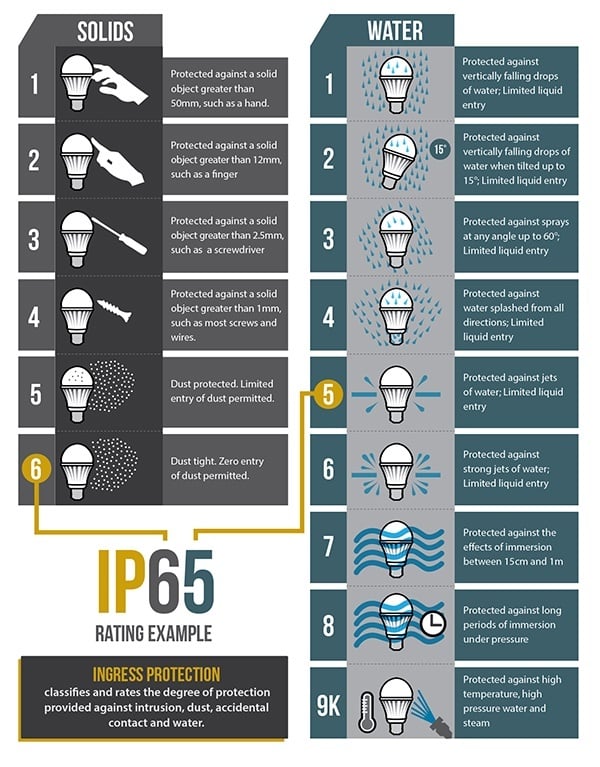
- Ingress Protection (IP) covers both moisture and particulates
- IP ratings are displayed using two digits (see below). The first digit signifies the rating for dust/particulates. The second digit signifies the rating for liquid.
- MIL STD 810g is a standard used by the US military to test equipment in a variety of extreme conditions or shocks.
WHAT IS REQUIRED BY MIL STD 810G?
The MIL STD 810g standard includes 28 different testing methods in scenarios that include:
- High temperature
- Low Temperature
- Rain
- Humidity
- Sand/Dust
- Immersion
- Vibration
- Shock
Although this standard was initially created for products designed for military applications, MIL STD 810g has made its way into commercial application as well. However, no commercial organizations or agencies actually certify for MIL STD 810g. Chassis Plans, a producer of rugged computers and LCD displays for the military, produced an interesting White Paper explaining MIL STD 810g, and how it has been applied (and misapplied) in commercial settings.
HOW TO INTERPRET INGRESS PROTECTION (IP) RATINGS
This chart, courtesy of superbrightled.com, provides a visual of how IP ratings are applied and read:
WHAT ARE CONFORMAL COATINGS?
Most electronics include printed circuit board assemblies (PCBA), fiberglass boards with components attached that are then sprayed or 'painted' with conformal coatings to keep the circuits dry and dust free. Conformal coating is an inexpensive way to keep electronic components functioning in less than ideal environments. There are five main types of conformal coatings, each with their advantages and disadvantages. The coating you choose is based on the application of your electronic product and the funtionality requirements within the application.
Urethane Resin (UR)
Urethane resins can be either single- or double-part substances.
Advantages
- Great chemical resistance
- Good humidity resistance
- Resistant to mechanical wear
Disadvantages
- Difficult to remove
- Risk of peeling
- Long cure times common
- Use of soldering iron for rework could leave brown-colored tint
Acrylic Resin (AR)
Acrylic resins are preformed acrylic polymers that have been dissolved in a solvent (source: ACI Technologies). They are typically one-part substances.
Advantages
- Easily applied and removed
- Makes for easy rework or repair
- No shrinkage during curing process
- Affordable option
Disadvantages
- Low chemical and solvent resistance
- Low abrasion resistance
- Not ideal for harsh environments
- Not ideal for high-temp applications
Epoxy Resin (ER)
Urethane coatings are usually two-part compounds, although one-part varieties are also available.
Advantages
- Great abrasion + moisture resistance
- Great chemical resistance
- Good humidity resistance
- Excellent performance in harsh environments
Disadvantages
- Difficult to remove
- Shrinkage during curing process
- Soldering iron required for rework or repair
Silicone Resin (SR)
Silicone resin coatings are single-component compounds that are often chosen for electronics that will be subjected to extreme temperature ranges.
Advantages
- Performs well in extreme temps
- excellent humidity + corrosion resistance
- good chemical resistance
- Adheres well to most PCB components/materials
Disadvantages
- Most difficult to remove
- Removal requires strong chemical strippers and harsh abrasion
- Localized repairs only
Parylene (XY)
Parylene coatings are applied through a process called chemical vapor deposition. Parylene becomes a gas when heated. After cooling, it is put into a vacuum chamber, where it polymerizes and turns into a film. The film is placed over the electronics.
Advantages
- Best solvent + extreme temperature resistance of all coatings
- High dielectric strength
- Coating forms at room temperature; no curing time required
- transparent and colorless
Disadvantages
- Difficult to remove; must be abraded off
- Specialized equipment needed for chemical vapor deposition
- Not ideal for long-term exposure outdoors
Designing electronics to survive the abuse we humans can create is no easy task, but you're not on your own. Guidelines like IP ratings, MIL STD 810g and understanding the pros and cons of the various conformal coatings can help direct your engineering team as they work to create your ideal product — able to withstand whatever gets thrown at it.
{{cta('c8c1893e-baf0-4c24-95c9-3e826f7ff7ec','justifycenter')}}